So it has been a long time since I last updated this blog. Since my last post a lot has happened, and through it all, getting myself together and writing a post became very difficult.
Soon after the last post tragedy struck in the village. Miriam Mwamba, the head teacher at our nursery school passed away while giving birth to her second child. It was incredibly sudden and absolutely heart wrenching... The baby, at the time, survived, but Miriam had a series of seizures and passed away about 24 hrs after the delivery. After a couple of days there was a funeral held. It was incredibly emotional. Even I, who only knew her for a few months, had a really hard time holding it together. Seeing the first born girl and Alex, the husband, was really difficult. And that day marked, by far, the hardest moment of my Peace Corps service. I have seen a great deal of death and dying in the villages over the last year and a half, but this is as close as it has gotten to me.
After allowing some time for everything to start to settle, and trying to allow all the dust to settle to see what all of us were left with, I started to assess where we were. Miriam was the foundation of the school, and to imagine it continuing without her was almost impossible. Also Alex, who is one of the people who had everything to do with all of the project we were working on at the moment, had moved to Kasama, and will likely never return here for good.
To add even more tragedy to the heartbreaking loss, Alex also lost the child, whom he named after Miriam after her death, to Pneumonia. I could not believe it when he told me. No one should have to go through so much suffering.
As you could imagine for me, or the village for that matter, to rebound from such a loss is incredibly difficult. Maybe because of the death, or possibly partly because of that change in seasons and work loads, I saw a great deal of the motivation to start and maintain projects dwindle. The Nursery school, which was already hurting financially, now had a stigma attached to it, and a lot of the villagers did not want to participate in propping it up.
The stigma I am talking about apparently is pretty deep rooted in a pseudo-belief in Sorcery. any people in the village believed that since Miriam and Alex started the Nursery School, that someone who was jealous put a curse on them and the school. Therefore no one wanted to be a part of it. I also soon found out that this worry about jealousies and whatnot extends to any project that is started that seemingly benefits one or a small group of people. It is really interesting to see how this belief in Sorcery is manifest. People tell me they don't believe in it, but it is very clearly often the explanation used for anything unknown. The headmaster of my school put it best when he said "Oh, I don't believe in Sorcery or any of that stuff... but it exists!"
On top of all of that, we also had some corruption issues with some of the new staff at the clinic. There has always been distrust between Government workers (Clinic, School, Court, Agriculture office) and the people residing in the village (farmers, carpenters, etc.). The Average villager in Mwamba truly believes that those coming from the cities ae just stealing money that is supposed to go towards developing the village. I must say I can't blame them. It is everything they have known up until now. So this adds a whole new dimension to my work. We need to find a way for everyone to work together, and for everyone in the village to feel like they both have a stake, and have some say over projects that are to come.
I think this experience speaks volumes about the difficulties of development work. It took me 7 months in my village to begin to understand some of the complexities and undercurrents in the society I am living in. To believe that a NGO can roll into a village and build a water pump without such an understanding is not only misguided, but also simplifying a complex society in a very insulting way. This is really one of the reasons I believe in the Peace Corps philosophy and paradigm. There are lots of things we can improve upon, but some of the basic tenants in place, I can confidently say, are among the best that currently exists.
So, back to my situation... By the beginning of July, I have become a bit frustrated by the lack of movement in the projects we have set up. I think it really is a combination of many things. Luckily, I have been able to get away for a bit. The first half of July was doing some Peace Corps work in the town close to my village, and the second half was going on Vacation with some family, and also with a friend that came for a couple of weeks.
It gave me some time to get away and regroup. When I get back, there will be a lot of change. I will be moving houses to a proper mud hut, I will be living next to the head man of a nearby village (and hopefully eating with them daily), there should be more clinic staff to work with, and my mind will be renewed. I am trying to look at this as a fresh start, and a time to make a final push, in these next 9 months, to buckle down and guide some improvement to the lives of some of the villagers. I think being equipped with a new and fresh perspective, and learning from all of the past mistakes, will inform a more positive and productive direction.
Wednesday, August 4, 2010
Monday, April 5, 2010
Crisis Averted
After having the meeting with the chief about the nursery school I had to go to Lusaka to see off Jessica (The only other Guinea Volunteer that came with me to Zambia ). She had decided to go home, and I wanted to make sure we were able to hang out a bit before she took off.
While I was gone, the Chief was going to address the whole issue with the nursery school with all of the concerned parties during one of his weekly meetings.
After a really great last hurrah with Jess I went back to the village. Already not in the greatest moods considering the circumstance, I met with the Headmaster of the Primary school and the Director of the Nursery school. They were supposed to tell me how well the meeting went… turns out the meeting did not go so well…
They told me that the Chief must have spoken with someone else in the time between our meeting together, and his weekly meeting. He ended up doing 3 things: First he dissolved the committee because they said they made really bad decisions… fair enough. Next he put the Headmaster in the school in charge of putting a new one together. Lastly he fined the Director of the nursery school 3,500,000 Kwacha (about 700 dollars). The chief said that the director, who is also a teacher at the primary school, was a thief and a drunk. He said that he stole the money from the hammer mill.
Now, this teacher is one of the people I really trust in the village. I am 100 percent sure he did not steal any money. He also really doesn’t drink… I am not sure what happened, but I was shocked. I was really apologetic to Alex, the director, and told him that I would do everything I could to take care of it. He is about to have another baby, and his daughter just broke her ankle, so this would be a bad time to pay that kind of money.
So… I decided to try to meet with the chief. The plan was to show him my confidence in Alex, give him some more information about the nursery school, and to hopefully convince him not to fine Alex. I tried really hard to get a meeting with the chief, but eventually I was forced to call him. I had to go toLusaka the next morning and I really wanted to take care of this before I left.
The discussion did not go as planned…
I tried to gently tell him what I described above. It did not go over well. Later I found out that he was mostly annoyed that I called instead of seeing him in person. I did not realize this was a problem. He seemed very angry at me for questioning his decision. He then said he would not fine Alex, but that the Nursery school was in my hands now and he wants nothing to do with it. I was speechless. Without his help, pulling the school together would almost be impossible. After a bit of verbal fumbling on my side, he hung up.
THEN, to add insult to injury, the Headmaster of the Primary school, Mr. Chungu, met with the chief. I guess the Chief expressed his anger toward me questioning his decision. Apparently it was very heated. Mr. Chungu then called me and told me that he also does not want to have anything to do with the Nursery school because he did not want to be on the bad side of the chief.
I explained to Mr. Chungu that I did not mean any offense by it. I just wanted to add a bit so that the Chief could make a decision with all of the available information. By no means did I mean to contradict his ruling.
I finally got back to Kasama. I also just got a phone call from Mr. Chungu. The miracle worker that he is, he had another meeting with the chief and apologized on my behalf. He also told the chief that we badly needed his help and that we all had to work together.
In the end, the Chief is happy, Alex does not have to pay the fine, the committee can stay together to create the Constitution, and the Chief is helping fund some of the things we need to do to pull the project together.
PHEW!
Its been a very emotional week…
While I was gone, the Chief was going to address the whole issue with the nursery school with all of the concerned parties during one of his weekly meetings.
After a really great last hurrah with Jess I went back to the village. Already not in the greatest moods considering the circumstance, I met with the Headmaster of the Primary school and the Director of the Nursery school. They were supposed to tell me how well the meeting went… turns out the meeting did not go so well…
They told me that the Chief must have spoken with someone else in the time between our meeting together, and his weekly meeting. He ended up doing 3 things: First he dissolved the committee because they said they made really bad decisions… fair enough. Next he put the Headmaster in the school in charge of putting a new one together. Lastly he fined the Director of the nursery school 3,500,000 Kwacha (about 700 dollars). The chief said that the director, who is also a teacher at the primary school, was a thief and a drunk. He said that he stole the money from the hammer mill.
Now, this teacher is one of the people I really trust in the village. I am 100 percent sure he did not steal any money. He also really doesn’t drink… I am not sure what happened, but I was shocked. I was really apologetic to Alex, the director, and told him that I would do everything I could to take care of it. He is about to have another baby, and his daughter just broke her ankle, so this would be a bad time to pay that kind of money.
So… I decided to try to meet with the chief. The plan was to show him my confidence in Alex, give him some more information about the nursery school, and to hopefully convince him not to fine Alex. I tried really hard to get a meeting with the chief, but eventually I was forced to call him. I had to go to
The discussion did not go as planned…
I tried to gently tell him what I described above. It did not go over well. Later I found out that he was mostly annoyed that I called instead of seeing him in person. I did not realize this was a problem. He seemed very angry at me for questioning his decision. He then said he would not fine Alex, but that the Nursery school was in my hands now and he wants nothing to do with it. I was speechless. Without his help, pulling the school together would almost be impossible. After a bit of verbal fumbling on my side, he hung up.
THEN, to add insult to injury, the Headmaster of the Primary school, Mr. Chungu, met with the chief. I guess the Chief expressed his anger toward me questioning his decision. Apparently it was very heated. Mr. Chungu then called me and told me that he also does not want to have anything to do with the Nursery school because he did not want to be on the bad side of the chief.
I explained to Mr. Chungu that I did not mean any offense by it. I just wanted to add a bit so that the Chief could make a decision with all of the available information. By no means did I mean to contradict his ruling.
After all of this, I went to Lusaka thinking that the whole project is in tatters, and at the end of the day it was my fault.
I finally got back to Kasama. I also just got a phone call from Mr. Chungu. The miracle worker that he is, he had another meeting with the chief and apologized on my behalf. He also told the chief that we badly needed his help and that we all had to work together.
In the end, the Chief is happy, Alex does not have to pay the fine, the committee can stay together to create the Constitution, and the Chief is helping fund some of the things we need to do to pull the project together.
PHEW!
Its been a very emotional week…
Sunday, March 14, 2010
Trust and Village Politics
When I got to my village, I kept hearing stories about the preschool that last, real, volunteer built. My official counterpart, who I don’t really work with anymore told me that it was mismanaged and that the director of the Nursery school was stealing money and resources and not paying the teachers. Knowing not to take just one person’s word for it, I set up a meeting with the Director. After a long meeting, which included receipts, he explained everything that happened to the school to cause it to be in its current state.
So the Nursery School was started to have a running capacity of 100 children. It was funded originally by an NGO. Then the NGO also purchased a corn meal grinder to be able to pay for the teacher’s salaries and the running cost of the school. The community was responsible for the shelter for the corn meal grinder and some of the supplies for the school. Also, the NGO wanted them to, when they make profits, plant 8,000 trees and give out a grant of around 450 dollars to a local women’s group for a project.
The last volunteer set up this project towards the end of her service. It really looked like a good plan. Unfortunately when she left, the only one in charge was the director. Because he had the money in his personal bank account and the school was struggling financially, people started turning against him in the village. This caused people that should have volunteered to help build the structures to demand money.
Then there were problems with the corn meal grinder. It was bought brand new, but the mechanic that put it together didn’t assemble it correctly. That caused it to break down… which in turn caused the villagers to assume that he bought it second hand. Then there was another spate of mechanics that broke it more of couldn’t fix it, all demanding money.
So after talking to the director, he told me that the employees haven’t been paid in 8 months, the grinder was working finally, but now well, the school did not yet have a constitution and was not registered with the gov’t, and was running with only 40 kids. He had already begun making charcoal to get some money for the staff. That was going well. Actually, pictures after #9 below are the finishing steps of preparing the charcoal to be prepared. More on that in a bit.
Ok, the headmaster of the primary school, probably the person in the village I work closest to, the director of the nursery school and I were summoned by the Chief of my area. This Chief is probably the 4th most prominent chief in all of Zambia. He is a really smart guy who used to be a journalist. Anyways, we explained what happened at the school and our plan looking forward. He gave us a few ways that he could help. That includes getting the money back from the mechanics that couldn’t fix the machine. I ten talked about our painful shortage of teachers, a need for more class rooms, and the fact that there is only one person at the clinic and he only has a high school diploma. Chief Mwamba was very skeptical about the village because he knows it is mired with village politics and stealing. I was telling the chief that, with me around, this new headmaster and staff of the primary school, and some other people I have met that have seemed eager and motivated to work, that now is the time to invest in the village, and I will do what I can to bring people together.
The meeting went really well. The chiefs have a lot of clout. Literally the NEXT DAY we got another trained staff member at the clinic with the promise of a registered nurse in the near future, 3 new teachers and money to begin building 3 more classrooms! So awesome.
Then I sat down with the headmaster of the school and brainstormed on how to build trust between the different sectors in the village. We decided to have a large meeting where we invite the heads of he court, agricultural office, clinic, nursery school and primary school. We also invited a government rep, the people on the committee in the village responsible for development, the guy that is supposed to inform people about government welfare programs, some of the village elders, and a person from an NGO called World Vision. So this is what you are looking at under #’s 6, 7, and 8. 6 was the meeting itself. 7 was all of the clinic workers sitting around a Peace Corps book they found, scheming about how to get me to do a funded project. And 8 was lunch. You can see an example of some of the food if you look closely.
The meeting was getting these groups together, presenting their responsibilities and goals in the village, discussing development priorities for the village as a whole so we can all work in the same direction instead of against one another, and talking about how we can work together on projects that are of shared interest. We also talked about how to make information about services that the government provides more accessible. The meeting was great. We even talked about building trust by opening up the books of each sector to one another and setting up some checks and balances. I was thrilled and think that is laid a great groundwork for future projects to be more likely to succeed.
Ok, what else do we have for pictures… so number 1 is a tour around the village with people from a national heritage preservation organization here in Zambia. So when the Chief of Mwamba dies, he is embalmed. A special group… the ones dressed up in black… are responsible for this. So they pick a site and stay there for a year ding this process. They will cook beans with salt, use the liquid and pour it into the body. Then they will literally smoke the body on a rotating stick for the whole year. Now these guys can’t bathe, shave, or see their families for this entire process! It was really cool to hear about it. Well, at every one of these sites, they leave a large piece of ivory in a bowl. The national heritage people now want to preserve the sites. That was a really fun day.
Number 2 is our little “market”. You are looking at just about all of it. It is two little stands.
Number 3… One of the radio stations called Radio Mano and the ministry of education people came for youth day. So the radio people were interviewing kids about their lives in the village. Then there was some dancing. The one pic is of some of the kids in our drumming club. The last one in that group is when 2 guys held up these sticks and the girl was dancing up a storm while balancing on them.
4 are just 2 kids that were at the youth day thing. I love my superhero t-shirts.
5 is how I charge all my stuff. Very important activity of each day is making sure those chargers stay in the sun. Probably takes up more of the day then it should…
# 9 was the charcoal making. So basically you stack up logs, smaller at the bottom to bigger at the top. Exhausting work. Then, the pics you see are us covering it with mud so that the heat cannot escape. You then keep a hole open and set it on fire from the bottom. After letting it burn for a bit you seal the hole and the logs get really hot and basically cook for a week. Then you take it out, let it cool, and you have charcoal. Anyways, the process was absolutely exhausting, but fun and earned me some great integration points with the villagers. One of the guys was showing me his contortionist abilities and I told him he was clearly in the wrong business.
So the Nursery School was started to have a running capacity of 100 children. It was funded originally by an NGO. Then the NGO also purchased a corn meal grinder to be able to pay for the teacher’s salaries and the running cost of the school. The community was responsible for the shelter for the corn meal grinder and some of the supplies for the school. Also, the NGO wanted them to, when they make profits, plant 8,000 trees and give out a grant of around 450 dollars to a local women’s group for a project.
The last volunteer set up this project towards the end of her service. It really looked like a good plan. Unfortunately when she left, the only one in charge was the director. Because he had the money in his personal bank account and the school was struggling financially, people started turning against him in the village. This caused people that should have volunteered to help build the structures to demand money.
Then there were problems with the corn meal grinder. It was bought brand new, but the mechanic that put it together didn’t assemble it correctly. That caused it to break down… which in turn caused the villagers to assume that he bought it second hand. Then there was another spate of mechanics that broke it more of couldn’t fix it, all demanding money.
So after talking to the director, he told me that the employees haven’t been paid in 8 months, the grinder was working finally, but now well, the school did not yet have a constitution and was not registered with the gov’t, and was running with only 40 kids. He had already begun making charcoal to get some money for the staff. That was going well. Actually, pictures after #9 below are the finishing steps of preparing the charcoal to be prepared. More on that in a bit.
Ok, the headmaster of the primary school, probably the person in the village I work closest to, the director of the nursery school and I were summoned by the Chief of my area. This Chief is probably the 4th most prominent chief in all of Zambia. He is a really smart guy who used to be a journalist. Anyways, we explained what happened at the school and our plan looking forward. He gave us a few ways that he could help. That includes getting the money back from the mechanics that couldn’t fix the machine. I ten talked about our painful shortage of teachers, a need for more class rooms, and the fact that there is only one person at the clinic and he only has a high school diploma. Chief Mwamba was very skeptical about the village because he knows it is mired with village politics and stealing. I was telling the chief that, with me around, this new headmaster and staff of the primary school, and some other people I have met that have seemed eager and motivated to work, that now is the time to invest in the village, and I will do what I can to bring people together.
The meeting went really well. The chiefs have a lot of clout. Literally the NEXT DAY we got another trained staff member at the clinic with the promise of a registered nurse in the near future, 3 new teachers and money to begin building 3 more classrooms! So awesome.
Then I sat down with the headmaster of the school and brainstormed on how to build trust between the different sectors in the village. We decided to have a large meeting where we invite the heads of he court, agricultural office, clinic, nursery school and primary school. We also invited a government rep, the people on the committee in the village responsible for development, the guy that is supposed to inform people about government welfare programs, some of the village elders, and a person from an NGO called World Vision. So this is what you are looking at under #’s 6, 7, and 8. 6 was the meeting itself. 7 was all of the clinic workers sitting around a Peace Corps book they found, scheming about how to get me to do a funded project. And 8 was lunch. You can see an example of some of the food if you look closely.
The meeting was getting these groups together, presenting their responsibilities and goals in the village, discussing development priorities for the village as a whole so we can all work in the same direction instead of against one another, and talking about how we can work together on projects that are of shared interest. We also talked about how to make information about services that the government provides more accessible. The meeting was great. We even talked about building trust by opening up the books of each sector to one another and setting up some checks and balances. I was thrilled and think that is laid a great groundwork for future projects to be more likely to succeed.
Ok, what else do we have for pictures… so number 1 is a tour around the village with people from a national heritage preservation organization here in Zambia. So when the Chief of Mwamba dies, he is embalmed. A special group… the ones dressed up in black… are responsible for this. So they pick a site and stay there for a year ding this process. They will cook beans with salt, use the liquid and pour it into the body. Then they will literally smoke the body on a rotating stick for the whole year. Now these guys can’t bathe, shave, or see their families for this entire process! It was really cool to hear about it. Well, at every one of these sites, they leave a large piece of ivory in a bowl. The national heritage people now want to preserve the sites. That was a really fun day.
Number 2 is our little “market”. You are looking at just about all of it. It is two little stands.
Number 3… One of the radio stations called Radio Mano and the ministry of education people came for youth day. So the radio people were interviewing kids about their lives in the village. Then there was some dancing. The one pic is of some of the kids in our drumming club. The last one in that group is when 2 guys held up these sticks and the girl was dancing up a storm while balancing on them.
4 are just 2 kids that were at the youth day thing. I love my superhero t-shirts.
5 is how I charge all my stuff. Very important activity of each day is making sure those chargers stay in the sun. Probably takes up more of the day then it should…
# 9 was the charcoal making. So basically you stack up logs, smaller at the bottom to bigger at the top. Exhausting work. Then, the pics you see are us covering it with mud so that the heat cannot escape. You then keep a hole open and set it on fire from the bottom. After letting it burn for a bit you seal the hole and the logs get really hot and basically cook for a week. Then you take it out, let it cool, and you have charcoal. Anyways, the process was absolutely exhausting, but fun and earned me some great integration points with the villagers. One of the guys was showing me his contortionist abilities and I told him he was clearly in the wrong business.
Thursday, March 11, 2010
Past few Weeks...
Ok, lots of pictures... so this is how I am going to work this. I will just number groups of pictures and explain them in the next blog post. otherwise this will get rediculously long.

1.)
2.)
3.)
4.)
5.)
6.)
7.)
8.)
9.)
Wednesday, February 17, 2010
Some more pictures...
So this is the sign going into my little village. Pretty fancy huh? just wait till you see the back...
nice, huh? so polite!
This is the dirt road I ride on to get into the Provincial capital.
Here are the all star teachers at Mwamba Basic School. we just got done with a 5 hour long meeting talking about how to improve the testing numbers. they are really a great group, and I see myself working ith them closely throughout my service.
This is the headmaster of my school that is drinking local beer out of a calabash usin a metal straw.... awesome!
This is that local beer... ummm, not really sure how to describe it... it is millet based and REALLY thick as you can see. After it is prepared, you boil water and pour it in. Then you use the straw to fish for the liquid. Actually not bad.
This is me with my handy dandy lawn mower. Look carefully and you will see it. It takes a while,but it never breaks down.
And in the yard is this monstrosity! don't touch or you will be itching for days.Can't continue without an adorable picture of my cat... (for the Chaco's company, my mailing address is listed on the blog. size 12 please)
not a bad setup...
Wednesday, February 10, 2010
Biking
There are 2 main reasons i in biking more then I ever have before. For one, like I explained, I am responsible for thirteen villages that surround my own. Also, I live a relatively short 30 km away froo the provincial capital.
For the villages in my catchment area, I cycle out to all of them at least once a month for the under five clinic that they hold. The villages are of varying distances. A couple are only a few km away, and the furthest is about 20km. Aside from the under five clinics, I also have to travel out to each to train each village health care worker. I have found some very motivated people, and that makes of want to in out there even more.
When it comes to the provincial capital, I don't have an option other then to bike. The road my village is on is hardly a road. It is more like a compacted dirt path that is wide enough for a car. Although a car could technically fit, no cars take that road. So, biking it is. The other problem is that, since i am in Kasama district, which includes Kasama, the provincial capital, i have a lot of work that involves visiting offices in town. This often means that in one day i will ride out to Kasama, hold my meeting, and ride back the same day. That makes 60km in a day on a mountain bike through mostly sand, gravel, and stone.
For the trips to Kasama, the ride up is grueling. Mostly up hill, it feels like forever. The way back is way better. This is really ideal because when I stock up on supplies and load up the bike, it is nice that it is mostly down hill.
So I make the trip up to Kasama at least once a week. All in all, between some cycling in the US, and everything I am doing here, makes of think that I will be reaching the 10,000km mark by the time, or soon after, I get home. Pretty cool. And this is on road biking, bush paths are not quite as fun as speeding down pavement on a super lite road bike. Bikes here have to be more like tanks. Gotta have spare parts on hand, mud guards, and a steel bike rack on back to support forty pounds or more you strap on it.
All of this also means that I have gotten good at bike maintainence. I re-tool my bike at least once a week to ensure smooth rides.
Anyways, at least the rides are getting easier!
For the villages in my catchment area, I cycle out to all of them at least once a month for the under five clinic that they hold. The villages are of varying distances. A couple are only a few km away, and the furthest is about 20km. Aside from the under five clinics, I also have to travel out to each to train each village health care worker. I have found some very motivated people, and that makes of want to in out there even more.
When it comes to the provincial capital, I don't have an option other then to bike. The road my village is on is hardly a road. It is more like a compacted dirt path that is wide enough for a car. Although a car could technically fit, no cars take that road. So, biking it is. The other problem is that, since i am in Kasama district, which includes Kasama, the provincial capital, i have a lot of work that involves visiting offices in town. This often means that in one day i will ride out to Kasama, hold my meeting, and ride back the same day. That makes 60km in a day on a mountain bike through mostly sand, gravel, and stone.
For the trips to Kasama, the ride up is grueling. Mostly up hill, it feels like forever. The way back is way better. This is really ideal because when I stock up on supplies and load up the bike, it is nice that it is mostly down hill.
So I make the trip up to Kasama at least once a week. All in all, between some cycling in the US, and everything I am doing here, makes of think that I will be reaching the 10,000km mark by the time, or soon after, I get home. Pretty cool. And this is on road biking, bush paths are not quite as fun as speeding down pavement on a super lite road bike. Bikes here have to be more like tanks. Gotta have spare parts on hand, mud guards, and a steel bike rack on back to support forty pounds or more you strap on it.
All of this also means that I have gotten good at bike maintainence. I re-tool my bike at least once a week to ensure smooth rides.
Anyways, at least the rides are getting easier!
Result of procrastination
Ok, so clearly I am bad at keeping up with this. I really haven't had a substantial blog post since I got to site, so I will try to make up for it now.
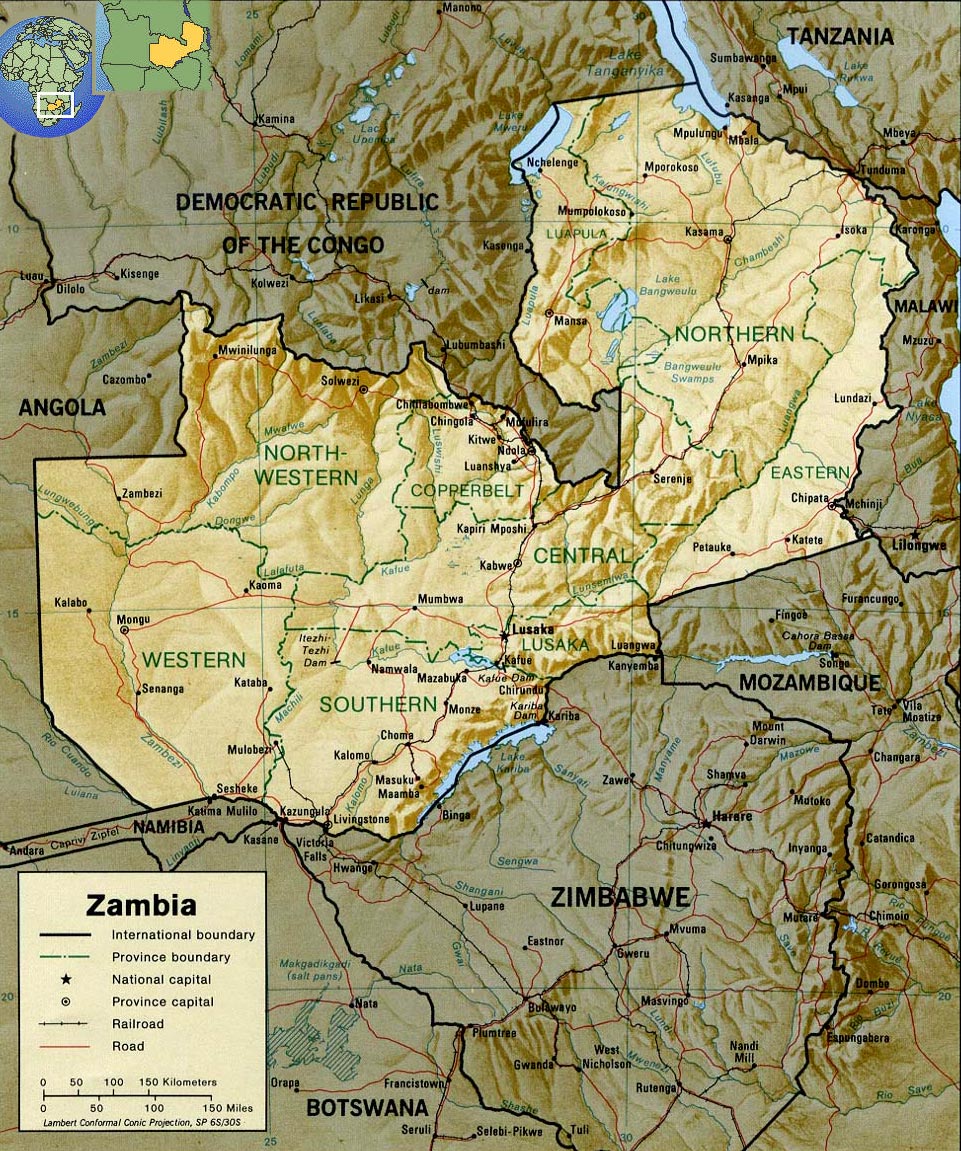
OK, so my village, Mwamba, is about 350 people strong. As compared to guinea, where my village was over 2000 this one is tiny. Rural Zambia is like this. It is really a lot more rural then Guinea, yet there are more organizations mostly due to a stronger government and many more NGO's. Anyways, although the village is small, I am actually responsible for this and the thirteen surrounding villages that make up the catchment area.
My village has a relativly nice clinic that lacks a full staff. Right now there is a cleaner and a part time high school graduate... Oh boy. We also have a school that has about half of the necessary teachers. Both the headmaster of the school and the person heading the clinic seen very motivated, which is great.
I will give a brief history of what i know of the volunteers that lived here before me. It will help to see my current situation in context.
The first volunteer i know about was a fish farming volunteer some eleven years ago. They teach how to make little man-made fish ponds that are a great way to make money. He started a fish farming cooperative that is now by far the most successful group in Mwamba. I say their budget and they are doing great!
More recently there was a health volunteer, like me, named lisa. She was, by all accounts a super volunteer. She trained a ton of health care workers, built a pre-school, and formed some strong relationships among other things. She would have been a fantastic example.
Now here is the kicker... The volunteer just before me was also a health volunteer but was almost exactly the opposite of what PC volunteers should be. He was in the village for only two weeks before he left but his legacy is just incredible. Before he even got to the village he knew what if wanted to do. First mistake. We are literally only supposed to observe for 3 months so we really understand the problems. Then he, in his infinite wisdom decided to create a fire house and a gym where kids can do physical education twice a day... Ok, sounds wholesome, but consider where i am... We are in the middle of the bush.
You would need to stop the water or find the nearest river to get water from. Then you have to lug it to the house that is on fire. The houses are made of grass roofs. Unless you get there within 2 min, the roof will be gone anyways.
Also, with regard to the gym, kids here are probably stronger then i am. They are constantly running around and even in to the fields and do hard labor. Also, what is the use of am enclosed gym when the vast majority of time the weather is perfect? It gives of the same feeling as when i eat ice cream too fast...
So, as much as I love my village, they have some unrealistic expectations of me. They really are pushing for infrastructue projects that I refuse to do unless I eventually see they are nature enough to keep it sustainable.
Ok, so what I am working on right now... I am starting by re-training all of the community health workers in each of the villages in the catchment area. I will train them on educating on everything from HIV, nutrition, water sanitation, importance of vaccinations, malaria, general hygiene, and more. My major focus will be on helping then better advise young mothers on child nutrition.
Past that i want to work with the health center and the ministry of health to get more baby weighing scales, get a full time staff, and train the current staff on useful simple procedures like suturing and injections.
Due to the highly motivated headmaster at the school, i also will work on that end. I am in the process of meeting each of the clubs and i will help out with the health related ones. Also, the school, er really the entire province did very poorly on the last test. So, the headmaster has asked me to in to a meeting with all of the other teachers to discuss what to do. This should be kind of fun and awesome because it is all in english.
Lastly future projects i want to do include teaching permaculture. This is a style of gardening that produces very strong plants, requires little maintenance, protects against heavy rains while utilizing water efficiently when pains are scarce, and encourages a variety of foods that is good for food security and nutrition. We learned it in our latest training and it seems promising. Also, i would like to see if we can't fix the water pumps in my village. Most are broken or rusting out.
Ok, that is a good place to end for now. I will add more very soon.
OK, so my village, Mwamba, is about 350 people strong. As compared to guinea, where my village was over 2000 this one is tiny. Rural Zambia is like this. It is really a lot more rural then Guinea, yet there are more organizations mostly due to a stronger government and many more NGO's. Anyways, although the village is small, I am actually responsible for this and the thirteen surrounding villages that make up the catchment area.
My village has a relativly nice clinic that lacks a full staff. Right now there is a cleaner and a part time high school graduate... Oh boy. We also have a school that has about half of the necessary teachers. Both the headmaster of the school and the person heading the clinic seen very motivated, which is great.
I will give a brief history of what i know of the volunteers that lived here before me. It will help to see my current situation in context.
The first volunteer i know about was a fish farming volunteer some eleven years ago. They teach how to make little man-made fish ponds that are a great way to make money. He started a fish farming cooperative that is now by far the most successful group in Mwamba. I say their budget and they are doing great!
More recently there was a health volunteer, like me, named lisa. She was, by all accounts a super volunteer. She trained a ton of health care workers, built a pre-school, and formed some strong relationships among other things. She would have been a fantastic example.
Now here is the kicker... The volunteer just before me was also a health volunteer but was almost exactly the opposite of what PC volunteers should be. He was in the village for only two weeks before he left but his legacy is just incredible. Before he even got to the village he knew what if wanted to do. First mistake. We are literally only supposed to observe for 3 months so we really understand the problems. Then he, in his infinite wisdom decided to create a fire house and a gym where kids can do physical education twice a day... Ok, sounds wholesome, but consider where i am... We are in the middle of the bush.
You would need to stop the water or find the nearest river to get water from. Then you have to lug it to the house that is on fire. The houses are made of grass roofs. Unless you get there within 2 min, the roof will be gone anyways.
Also, with regard to the gym, kids here are probably stronger then i am. They are constantly running around and even in to the fields and do hard labor. Also, what is the use of am enclosed gym when the vast majority of time the weather is perfect? It gives of the same feeling as when i eat ice cream too fast...
So, as much as I love my village, they have some unrealistic expectations of me. They really are pushing for infrastructue projects that I refuse to do unless I eventually see they are nature enough to keep it sustainable.
Ok, so what I am working on right now... I am starting by re-training all of the community health workers in each of the villages in the catchment area. I will train them on educating on everything from HIV, nutrition, water sanitation, importance of vaccinations, malaria, general hygiene, and more. My major focus will be on helping then better advise young mothers on child nutrition.
Past that i want to work with the health center and the ministry of health to get more baby weighing scales, get a full time staff, and train the current staff on useful simple procedures like suturing and injections.
Due to the highly motivated headmaster at the school, i also will work on that end. I am in the process of meeting each of the clubs and i will help out with the health related ones. Also, the school, er really the entire province did very poorly on the last test. So, the headmaster has asked me to in to a meeting with all of the other teachers to discuss what to do. This should be kind of fun and awesome because it is all in english.
Lastly future projects i want to do include teaching permaculture. This is a style of gardening that produces very strong plants, requires little maintenance, protects against heavy rains while utilizing water efficiently when pains are scarce, and encourages a variety of foods that is good for food security and nutrition. We learned it in our latest training and it seems promising. Also, i would like to see if we can't fix the water pumps in my village. Most are broken or rusting out.
Ok, that is a good place to end for now. I will add more very soon.
Subscribe to:
Posts (Atom)